
St. Lucie Weekly Arrest Sources
No single verified ledger collects every St. Lucie County arrest from the past seven days. Nothing like that exists. The clearest official multi-day source is the Fort Pierce Police Department Police Blotter, a digest built for news media. Fort Pierce police assemble it themselves. It covers recent incidents and arrests chosen for public awareness. Its reach stops at the city line. The department also warns that many incidents and arrests never make the list. So treat it as a news digest rather than a county jail intake sheet. The county systems answer different questions. The St. Lucie County jail roster shows who is in custody now, plus a short window after release. The Sheriff's Daily Arrest Information page is the affidavit route, with an archive offering search controls. Its 48-hour Release Report tracks people leaving jail. None of these replaces the others. Start with the blotter for selected Fort Pierce events, then confirm custody on the county roster. The official FPPD blotter page links readers straight to the report files.
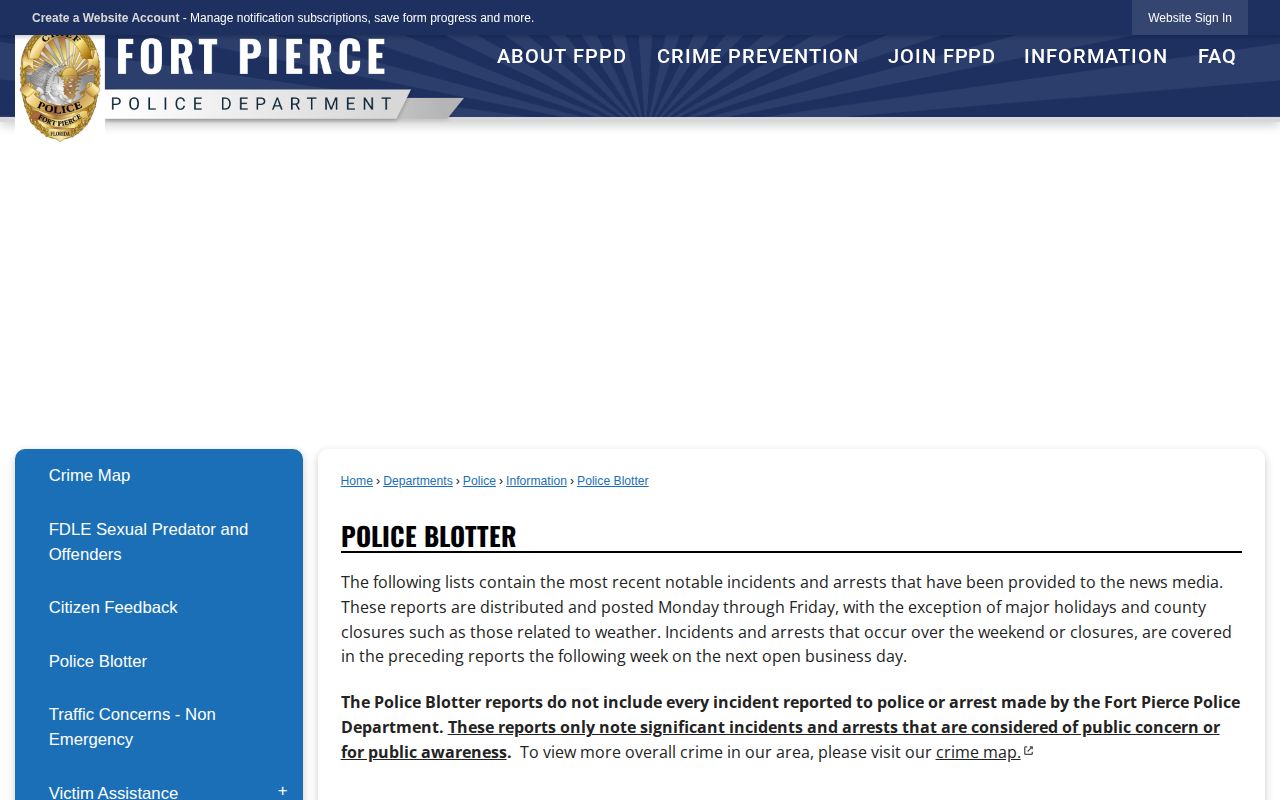
The official FPPD blotter page shows how Fort Pierce formats its media reports. It is a selective digest, not a booking feed.
Read the St. Lucie Blotter
Start from the report date and work toward the custody and court records. A missing name means little. FPPD selection can explain it. So can a weekend delay, a different arresting agency, or the time jail intake takes.
- Open the FPPD Police Blotter and review the latest posted reports. Note the publication date and the incident date described inside the report.
- Confirm that FPPD made the arrest. An SLCSO, PSLPD, FHP, FWC, federal, or other agency record follows that agency’s affidavit and records path.
- Search the Sheriff’s roster by a partial first or last name. Open the profile and compare identity, arresting agency, booking date and time, charge description, and release status.
- Check the Sheriff archive and release report when the current roster does not resolve the question. For a pure same-day view, use the Daily Arrest Report.
- Search the St. Lucie Clerk Court Case Search for filed charges, hearings, and disposition. A jail label can differ from the charge later filed in court.
Need an FPPD affidavit or incident report? Use the public-records request link Fort Pierce police provide. The Sheriff's Amendment 6 notice draws the same ownership line between agencies. Even so, a Fort Pierce arrest can still show in the SLCSO jail roster, because custody belongs to the county.
St. Lucie Arrest-Log Fields
The two sources expose different fields. A blotter item is a chosen narrative, while a jail profile is an identification and custody snapshot. Read each field in context.
| Field | Where and what it means |
|---|---|
| Incident date and location | May appear in an FPPD narrative to place a notable event in time and place. |
| Incident or arrest summary | Selected FPPD information released to news media, not every charge or report detail. |
| Name and inmate ID | Roster identity fields used to distinguish people with similar names. |
| Arresting agency | Identifies which agency should receive a request for the arrest affidavit or police report. |
| Booking date and time | Shows when jail intake was recorded, which may differ from incident or arrest time. |
| Charge and status | Accusations recorded at booking. They can be changed, reduced, dismissed, or replaced in court. |
| Bond and release data | Custody information, not a sentence or final case disposition. |
| Booking image | May be available on an eligible live jail profile; the blotter does not promise a photo for every item. |
The blotter and the jail profile each list a charge field. Neither field tells the whole story on its own.
Weekend St. Lucie Arrest Reports
FPPD posts its blotter Monday through Friday. Major holidays and county weather closures pause it. Weekend and closure incidents ride along with the next open business day's reports. A Friday-night arrest may surface midweek. That built-in lag defines the Fort Pierce source.
Weekend timing: Check the county roster for current custody. Return to the FPPD blotter on the next open business day.
That weekday schedule governs only the FPPD blotter. The Sheriff's roster runs on a different clock. It is a live custody query, updated periodically, with no published refresh interval or weekend guarantee. Booking takes time. Intake, identity checks, and data entry all precede a searchable entry. A short stay can end before you search again. When a name is missing, the silence proves nothing. Check the release report next. Then try the arresting agency's own records channel. The multi-day approach earns its keep after a holiday or weather closure, since the later FPPD digest can be compared against live jail data. Port St. Lucie police offer no comparable routine blotter, and St. Lucie Village posts no municipal booking feed. A gap in those cities is normal, not hidden.
St. Lucie Arrest Archives
The Sheriff's Archive gives you real search power. Filters cover archive type, keywords, time period, and date range. One catch stands out. The Daily Arrest Reports category can sit empty. Individual archived affidavit pages show the document structure exists. That structure does not promise a complete rolling archive of old arrests. So work the live page first, then request the record if the category comes up empty; the official archive interface displays every control you will use.

Archives have limits. Not every old arrest affidavit is indexed there. When the roster and the archive both come up short, file a focused request. The Sheriff's Public Records Request page and the JustFOIA portal both accept submissions. Ask for each item separately. The booking record, booking photo, arrest affidavit, and release entry are distinct documents. Include a name, an approximate date, the arresting agency, and any booking or case number you have. Send FPPD reports to Fort Pierce police. A Port St. Lucie arrest record belongs with PSLPD's records channel.
Florida Arrest-Record Retention
How long a record lives online and how long the law requires it kept are separate questions. Florida answers the second one through General Records Schedule GS2, which Rule 1B-24.003 folds into state records rules. Two series matter for bookings. One covers booking records themselves. The other covers commitment and release lists. Each must be held for one full year after release, at minimum. Agencies can hold St. Lucie County arrest material longer if they choose.
That one-year mark is a floor, not a countdown for photos. A booking image can vanish from a live page in days or persist well past the year. Investigative files tell a different story. Affidavits, photos, warrants, narratives, bond data, and outcomes sit under longer offense-based schedules. Some material carries access limits even while retained. Sealed or expunged items, juvenile files, victim data, medical details, and open investigations all fit that category. The series and the case facts control what applies.
For an older St. Lucie County record, ask the agency that created it a direct question. Did it search successor systems? Was the item destroyed under a schedule, transferred, archived, sealed, or withheld under an exemption? Then run a separate Clerk search for the court chain. The Florida records-management FAQ is clear that general schedules set minimums only. The Clerk, not the jail, holds the filed court history.
St. Lucie Court Record Check
The jail roster and the blotter show the front end of a St. Lucie County case. The Clerk shows everything that came after. Search the Clerk public-search page or Court Case Search by name. Use a case number when you have one. Filings, court dates, bond orders, pleas, trial events, and the final disposition all live there. Treat the jail label loosely. A booking description may never become a filed charge. The filed charge may differ from what the jail listed.
Timing pulls apart too. A person can walk out of the jail while the case is still open. A new booking can appear before the Clerk dockets anything at all. Outcomes come in many forms. Dismissal, acquittal, diversion, withheld adjudication, plea, and conviction are all distinct. Only the court record supplies that later history. Documents not online go through public-record requests. The Clerk publishes a completion estimate of two to seven business days. Timing depends on availability and complexity. That estimate applies to Clerk requests only, never to Sheriff or police departments.
The 48-hour release report answers one narrow question: whether someone left county custody. It says nothing about the court matter, which continues on its own track. VINELink handles custody status and alerts. The Florida Department of Corrections covers state prisoners and supervision. Keep those systems apart rather than blending them into a single arrest count.
News Beyond the Arrest Blotter
Official St. Lucie County pages change fast. News stories last longer. WFLX Crime runs Treasure Coast case stories that touch Fort Pierce, Port St. Lucie, and other parts of the county, and an old report can still point you to an event after the live roster has moved on. Remember the difference in rhythm. Newsrooms publish on judgment, not jail intake. A story may carry video, a still image, a booking photo, or no image at all, and none of it adds up to a complete St. Lucie County arrest log. The WFLX crime section shows that gap between story-driven reporting and an official roster.
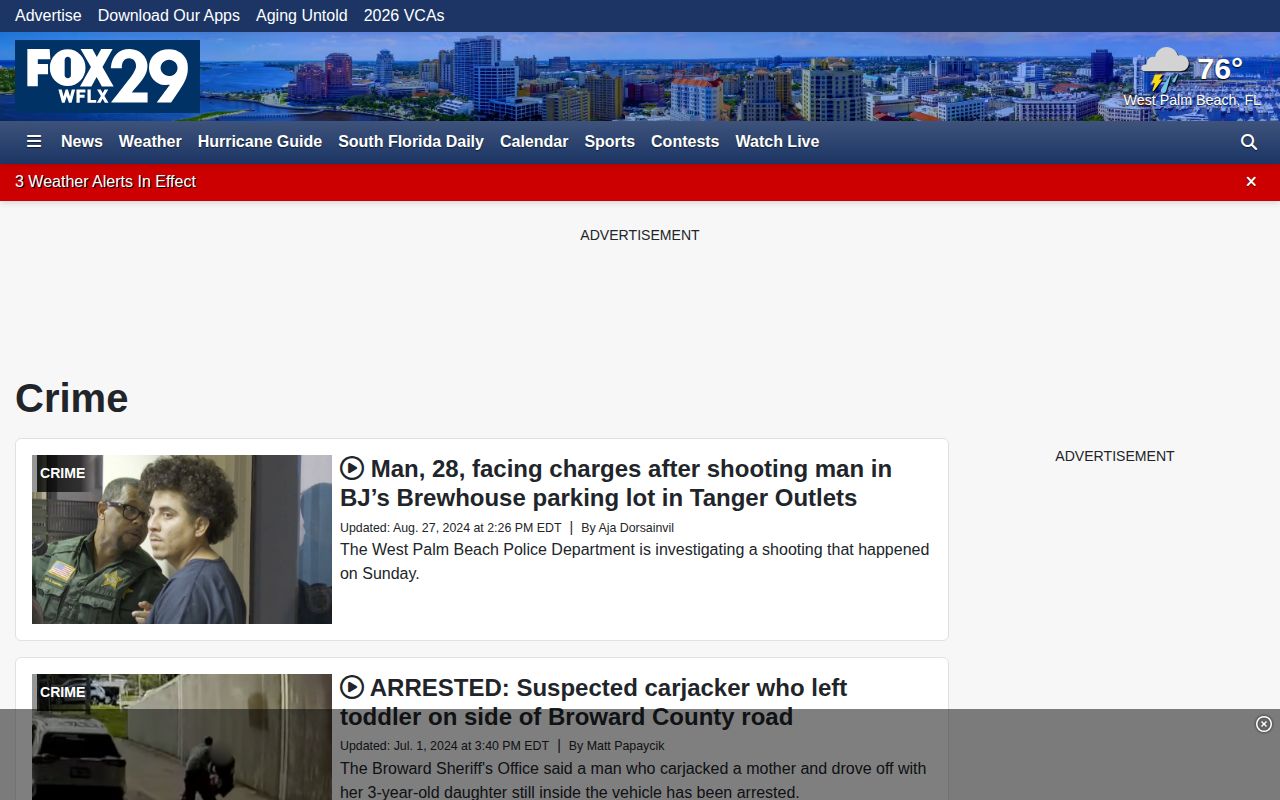
A news layout helps with discovery. It proves nothing by itself. Every claim still needs confirmation from the arresting agency or the Clerk.
Old newspapers open another historical path for St. Lucie County arrests. Digitized Hometown News issues carry arrest lists, including a January 3, 2025 county issue that says its list was compiled from public records. That is weekly, issue-based reporting. It is not a live feed. TCPalm and WPTV also cover county cases, though coverage can be selective, blocked, or reshaped into a rolling news feature.
Unofficial arrest aggregators sometimes keep deeper copies than the official live pages. Depth is not accuracy. Entries can be duplicated, mismatched, or stale after a charge changes or a case closes. Put official sources first: the arresting agency for the report, SLCSO for jail custody, the Clerk for disposition. Treat news and private pages as discovery aids only.